Source Fishing Sinker Options for Casting, Netting, and Rigging
Explore 14 distinct fishing sinker models available for wholesale sourcing. Compare specifications including materials like lead and iron alloy, shapes such as olive and cylindrical, and weights ranging from 3g to 200g. Evaluate features like corrosion resistance and customization options for marine and freshwater applications.
Key considerations
Products List


Comprehensive Sourcing Guide
Fishing Sinker Sourcing Guide
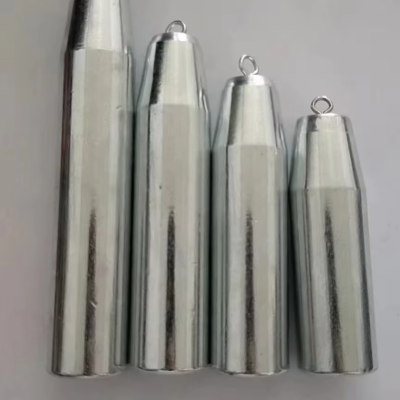
Buyers must first distinguish between the diverse forms available in the current market, ranging from solid cylindrical weights to hollow olive-shaped designs. The observed product list indicates a significant variation in shape, including water drop, olive, and cylindrical profiles, which directly impacts hydrodynamic performance and line twist resistance. Understanding these physical distinctions is critical before engaging with suppliers, as the intended fishing rig—such as Carolina, Texas, or inline setups—dictates the optimal geometry for the specific application.
Procurement decisions should also account for the material composition and surface treatments observed in the listings, which include lead, cast iron, and iron alloys with zinc plating. While some products feature soft silicone coatings for line protection, others rely on electro-galvanized or hot-dip galvanized finishes for corrosion resistance in marine environments. Buyers need to verify that the selected material aligns with their target water conditions, whether freshwater, coastal, or deep-sea, to ensure the sinker maintains its structural integrity and weight distribution over time.
Product Scope and Observed Listing Signals
The current market signals reveal a wide spectrum of weight capacities, with observed specifications ranging from 3 grams up to 200 grams and beyond. Listings explicitly mention models like GC1 and GC2, which cover ranges from 3g to 40g and 3g to 200g respectively, while other entries suggest customizable weights up to 100g. This variability allows buyers to source precise weights for delicate presentations or heavy-duty applications like net weighting and trawling, but it requires careful filtering to match the exact gram requirements of the target fishing scenario.
Packaging and customization options are equally diverse, with suppliers offering standard cartons, 25kg bags, or fully custom packaging solutions. Some products are listed with specific model numbers like DSTB-40330, while others emphasize OEM and ODM services for custom sizes and weights. Buyers should note that while some items come in paper boxes, others utilize robust cartons or plastic bags, and the availability of through-holes with plastic cores suggests specific design features aimed at reducing line abrasion during casting and retrieval.
Technical Specifications to Verify
Verification of the hollow versus solid construction is a primary technical step, as the observed data includes both solid cylindrical weights and hollow olive-shaped sinkers. The presence of a plastic core within a through-hole design is a specific feature noted in the listings, intended to enhance line protection and reduce twisting. Buyers must confirm whether the specific unit they are ordering possesses this hollow architecture or is a solid cast, as this distinction fundamentally alters the sinker's buoyancy, casting distance, and interaction with the fishing line.
Surface treatment and material hardness are critical verification points, particularly for operations in saltwater or abrasive environments. The supply data indicates treatments such as electro-galvanizing, hot-dip galvanizing, and zinc plating, alongside materials like cast iron and iron alloys. Buyers should request detailed specifications on the thickness of the plating and the hardness of the alloy to ensure the sinker meets the durability requirements for long-term use, especially when the application involves high-velocity casting or contact with rocky riverbeds.
Compliance and Safety Documentation
Safety documentation is paramount when sourcing lead-based products, as lead poses specific environmental and health risks that require strict regulatory adherence. Buyers must ensure that suppliers provide evidence of compliance with international restrictions on lead usage, particularly if the products are destined for markets with stringent environmental laws. While the observed listings mention lead as a material, the procurement process must verify that the supplier has implemented proper handling protocols and that the final product meets the safety standards of the destination country.
For non-lead alternatives like cast iron or iron alloys, buyers should still verify documentation regarding surface treatment safety and corrosion resistance claims. The observed products claim rustproof and wear-resistant properties, but these assertions require backing from independent test reports or material safety data sheets. Ensuring that the zinc plating or galvanized coatings are applied according to recognized industrial standards is essential to prevent premature failure and to guarantee that the sinker remains safe for use in sensitive aquatic ecosystems.
Cost Drivers and Commercial Terms
Material costs and surface treatment processes are the primary drivers of pricing in the fishing sinker market, with lead and iron alloys commanding different price points. The observed price range of 0.04 to 4.41 USD per unit reflects the variance in material density, weight, and the complexity of the galvanizing or plating process. Buyers should analyze how the specific weight and surface finish of a model influence the unit cost, as heavier sinkers and those requiring double-dip galvanization will naturally incur higher production expenses.
Minimum Order Quantities (MOQ) and packaging configurations significantly impact the total cost of ownership and cash flow management. The observed MOQs range from a single unit to 5000 units, with some suppliers setting a specific threshold of 100kg for certain alloy products. Buyers must balance the need for inventory flexibility against the economies of scale offered by bulk orders, while also considering the cost implications of custom packaging versus standard 25kg bag or carton shipments.
Supplier Qualification and Quality Control
Supplier qualification should focus on their manufacturing capabilities regarding precision casting and surface treatment consistency. The observed data highlights processes like precision casting and various galvanizing methods, which require specialized equipment and skilled labor to maintain uniform weight and finish. Buyers should assess the supplier's capacity to maintain tight tolerances on weight and dimensions, as inconsistencies can negatively affect casting performance and the overall reliability of the fishing tackle.
Quality control protocols must be verified to ensure that the sinkers meet the claimed durability and corrosion resistance standards. Given the observed features like rustproofing and line protection, buyers should request evidence of quality checks performed on the final products, such as salt spray tests or hardness measurements. Establishing a clear quality assurance framework with the supplier is essential to prevent the receipt of substandard goods that could fail during critical fishing operations or damage expensive fishing lines.
Long-Term Procurement Checks
Long-term procurement success depends on the supplier's ability to maintain consistent product specifications over time, particularly regarding material composition and weight accuracy. Buyers should implement periodic audits to ensure that the cast iron or lead alloys used in production have not been substituted with inferior materials that compromise the sinker's density or structural integrity. Consistency in the weight range, whether it is the 3g-40g or 3g-200g spectrum, is vital for maintaining the reliability of the fishing rigs used by end customers.
Evaluating the supplier's responsiveness to customization requests and their ability to adapt to changing market demands is another critical long-term check. The observed listings show a strong emphasis on OEM and ODM services, indicating that flexibility is a key competitive factor. Buyers should monitor the supplier's track record in delivering custom sizes and weights on schedule, as the ability to quickly adapt product specifications can be a decisive advantage in a dynamic fishing tackle market.
FAQs
What materials are fishing sinkers typically made from?
Fishing sinkers in this listing are typically made from lead or cast iron with zinc plating, and some options use an iron alloy described as a tungsten alternative paired with soft silicone. Cast iron models are precision cast and galvanized for corrosion resistance. Buyers should confirm the exact material for each model, since surface treatments and coatings can differ between products.
Which weight ranges are available for these fishing sinkers?
Available weight ranges depend on the model. Listed standards include 3g to 40g, 3g to 100g, and 3g to 200g, with specific weights such as 6g, 10g, 20g, 25g, 30g, 40g, 45g, 50g, 60g, and 70g offered. Some items are also listed at 200g or 250g. Customizable weights are available through OEM and ODM service on certain models.
Can fishing sinker sizes, weights, and packaging be customized?
Yes, customization is available on listed products. Services include OEM and ODM support with custom size and custom weight, and packaging options such as 25kg bags, cartons, PP bags, paper with box, or custom bag packaging. Buyers should specify their required weight range, packing format, and labeling before requesting a quotation, since customization terms and minimum order quantities vary by model.
How do galvanized cast iron sinkers resist rust in saltwater?
Cast iron sinkers receive surface treatments such as electro-galvanizing, hot dip galvanizing, or zinc plating, which create a protective layer that resists corrosion, rust, and wear. This makes them suitable for marine grade, freshwater, and coastal use. Buyers fishing mainly in saltwater should confirm which coating type is applied to the specific model they intend to order.
Which fishing rigs and nets work with these sinkers?
Listed sinkers support Carolina rigs, Texas rigs, and inline rigs, and provide smooth casting, long casting, and quick sinking performance with anti-line-twist weighting. Heavier cast iron models also apply to net weighting, cast nets, gill nets, and trawling. Buyers should match the shape, such as olive, water drop, or cylindrical, to their rig or net type.
What is the minimum order quantity for fishing sinkers?
Minimum order quantities vary across the listed products, ranging from as low as 1 unit to 5,000 units, and one iron alloy sinker listing states an MOQ of 100kg. The exact MOQ depends on the model, weight range, and customization level requested. Buyers should confirm MOQ for their chosen specification when contacting suppliers to compare offers.